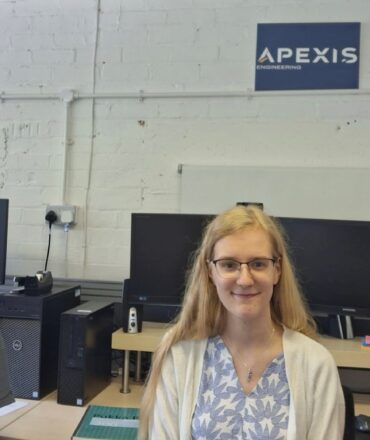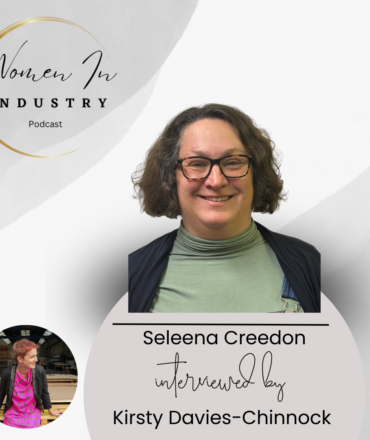


In 2025 Seleena was a podcast guest on the Women in Industry Podcast which is hosted by Kirsty Davies-Chinnock who is the Managing Director of Professional Polishing Services Ltd.
Seleena takes Kirsty through the company’s recent rebranding, the challenges of working under NDAs, and the dynamics of the business partnership with co-director, Craig. The conversation delves into strategic planning, the importance of self-care for business owners, and the power of saying no.
Seleena shares insights on navigating the complexities of running a manufacturing business while maintaining a positive outlook and a strong team dynamic.
How to run a manufacturing business (and still look after yourself)
In the latest episode (which is number 4 in the 4th series) of the Women in Industry podcast, Kirsty Davies‑Chinnock sits down with Seleena Creedon, Director at Apexis Engineering, to talk about what it really takes to run a bespoke machinery business in the Midlands.
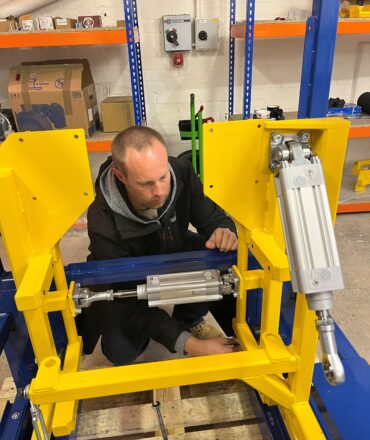
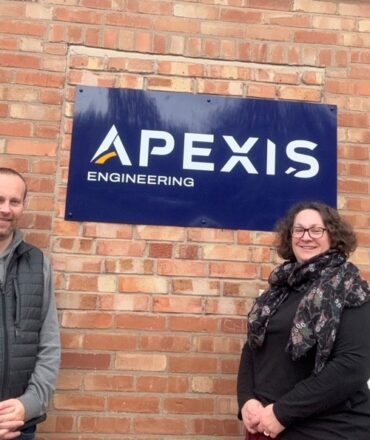
Seleena has been involved with Apexis Engineering since March 2020, initially as a consultant to the business later becoming a director having spent 15 years in an international mining and manufacturing company so she’s truly in the category of ‘women in industry!’. In 2024 Seleena became a shareholder as part of a management buy out with Craig. The team has ‘pivoted’ the business to expand service lines and introduced new offerings plus have moved from a design office to an industrial unit in Derby (East Midlands). Shortly after the move a long standing client awarded a contract to design, manufacture and commission 4 plug and play bespoke machines and that has been the start of building the business in the way Seleena and Craig wanted to.
The Apexis Engineering story: from design to delivery
Apexis Engineering specialises in custom, one‑off machinery and automation solutions for manufacturing clients, often working in sectors where reliability and precision are critical.
Seleena explains how the company evolved from a small design office into a full‑service engineering business, taking projects from concept and CAD through to build, commissioning and aftercare.
She talks about the importance of understanding the client’s process inside out, not just delivering a machine that works, but one that fits seamlessly into their production environment.
Leading under pressure: the power of saying “no”
One of the big themes in the conversation is how hard it can be for business owners to say no – to extra work, to scope creep, or to demands that don’t align with the company’s values or capacity.
Seleena is honest about the toll that constant firefighting can take, and how she’s had to learn to protect her time and energy, not just for herself but for the team.
She shares practical examples of when turning down a project that did not fit the skillset of the team or pushing back on unrealistic deadlines actually strengthened the business in the long run.
Partnership and trust: working with your co‑director
Seleena opens up about her business partnership with Craig, the other Co‑Director at Apexis, and how they’ve built a strong working relationship over the years. She talks about the importance of clear roles, honest communication, and mutual respect, especially when working under the pressure of tight deadlines and complex projects.
Seleena highlights how having a trusted partner in business has been game changing for herself; not just to enable the business to grow in the desired direction but knowing that Craig is a very safe pair of hands when it comes to business and their working relationship.
Why being “selfish” is actually good for business
The episode’s title – “Being selfish is absolutely fine” – comes from a powerful message about self‑care for business owners and leaders that Seleena has tuned into from a local business leader she knows and respects. For women in industry the term is likely to be one never used; aspiring to be selfish is never on anyone’s to do list!
Seleena explains that she has learnt the hard way about looking after her own wellbeing like taking proper breaks, setting boundaries, and making time for family and hobbies – this isn’t a luxury, it’s a necessity for sustainable leadership.
Final thoughts: sustainable success in manufacturing
The conversation is a great reminder that long‑term success in engineering and manufacturing isn’t just about technical skill or winning contracts – it’s also about leadership, culture, and looking after the people who make it all happen.
Seleena’s message is clear; running a business is tough, but it doesn’t have to burn you out. By being intentional about boundaries, partnership, and self‑care, it’s possible to build a business that’s both successful and sustainable.
Listen to the Podcast here https://www.youtube.com/watch?v=b0wBtVc6Avw&feature=youtu.be