

At Apexis Engineering our design philosophy could be considered as creating a perfect jigsaw for bespoke machinery; every component, bracket, panel and element locks perfectly in place. That makes it easy to manufacture, easy to assemble and easy to maintain once installed within a factory When creating machinery we’re committed to it operating smoothly, reliably and with uncompromising precision for whatever it’s doing within your plant.
Designing bespoke machinery with purpose and precision
Every project here at Apexis Engineering begins with a thorough understanding of the problem our client needs to solve. Whether that’s improving throughput on a production line, having a new process for a new or existing product, improving the quality of products, automating a complex or manual process or replacing old or unreliable plant with new. Our mechanical design engineers start from the outcome and work backwards to ensure the solution is the best one for the client. Our concept to completion model as a turnkey engineering company is delivered with the end goal in mind for bespoke machinery.
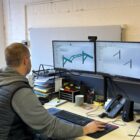
Using our CAD modelling expertise and decades of combined experience our design work will always consider every part being assembled seamlessly to avoid any frustrations of misalignment or rework required during installation and commissioning of machinery. At Apexis Engineering ‘close enough’ simply isn’t good enough when it comes to the bespoke machinery that we design and supply.
Engineering tolerances as invisible art
Engineering tolerances might be invisibly to the eye, but they are what actually separates an average bespoke machine build from a world-class one. Here at Apexis Engineering we are always aiming for world-class! We design every bracket, frame, bearing and fixture to fit within carefully controlled parameters without making anything complex. By working in this way we eliminate variation before it can cause any problems during assembly or further down the line when it’s in use within a factory. Apexis Engineering work in a way that mans every bespoke machine behaves exactly as it was intended from day one.
Our design process ensures that the final assembly remains within specification which results in bespoke machinery that not only fits together perfectly so is easy to maintain by your engineering team but performs with consistent accuracy shift after shift within your factory.
The jigsaw effect in action
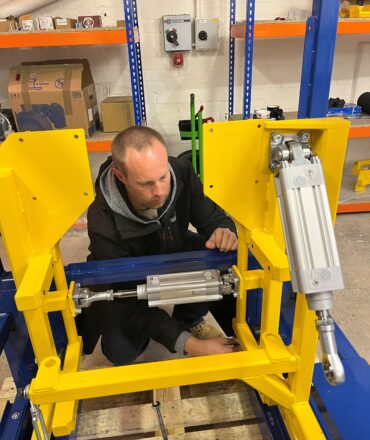
“I have designed the machinery therefore I am the best person to assemble it” Craig states.
But once assembly begins in our workshop the precision of our detailed design becomes tangible. Every bolt hole aligns, every component locates into position effortlessly, and every subassembly connects as though the machine is building itself.
It’s a moment of satisfaction our mechanical engineers never tire of; watching concepts and drawings transform into perfectly aligned reality. Like pieces of a finely crafted jigsaw, the whole becomes more than the sum of its parts.
Quality that holds it all together
Precision design is only valuable if it is backed by quality manufacturing and assembly. That’s why every project at Apexis Engineering is managed under strict quality control processes, from materials inspection to final testing. We don’t just want out machines to fit together, we want them to stay that way for years to come.
In the end, that’s what defines Apexis Engineering; our commitment to designing everything to fit, function and perform together seamlessly to create a stunning jigsaw for your bespoke machinery requirements,
Jigsaws in action
We like jigsaws; they are precision ‘toys’ that are so well crafted. That’s why, in 2023, we sponsored Just Jigsaws with their world- record attempt where this small Derbyshire firm hoped to set a world record by creating the largest ever hand-cut wooden jigsaw puzzle which was made of 120,000 pieces and stretching a third of a mile (0.5km) from end to end. We provided some pictures of our work to feature on this giant jigsaw showcasing our bespoke machinery from concept to completion with 3D CAD models and the finished machines in action within the factories and plants where they were designed to be.