

As we start a new year, we thought we’d review what’s forecast for the UK manufacturing sector which is where Apexis Engineering operates and who we serve. If you pushed us to focus on an actual word this year, we’d choose either bespoke or quality because it’s what we do and how we do everything.
The outlook for the UK Manufacturing sector in 2026 is one of cautious recovery with growth edging back into positive territory, but confidence and investment remaining fragile, especially around skills, energy costs and taxation. For the East Midlands, the picture is similarly mixed, yet underpinned by major long-term opportunities around clean energy, advanced manufacturing and the new East Midlands Investment Zone.
National manufacturing picture
The words for this: slow recovery, softer headwinds.
Manufacturing sector activity ended 2025 with marginal growth, with the S&P Global PMI rising to 50.6 in December which is the fastest pace in 15 months and the second consecutive month above the 50 “growth” threshold. This improvement was driven mainly by domestic orders and the unwinding of earlier shocks such as the Jaguar Land Rover cyber-attack and Autumn Budget uncertainty, rather than by a strong, broad-based demand surge.
Recently published articles which include insights from surveys highlight that manufacturers benefited as several headwinds eased late in 2025 including tax fears receding, JLR restarting production, supply chains stabilised and delivery times improved. However, the same survey shows overseas demand falling for the 47th consecutive month and business optimism dipping again, with employment in the sector declining for the fourteenth month running.
RSM’s manufacturing investment outlook points to modest GDP growth of around 1% in the coming year, with interest rates expected to stay relatively high and inflation above the Bank of England’s target, keeping pressure on margins. In this environment manufacturers are prioritising investments with clear productivity gains; skills, automation, digitalisation and resilience, while deferring or phasing the largest capital projects due to the higher cost of capital and fiscal uncertainty.
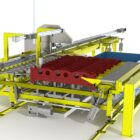
During 2025 Apexis Engineering witnessed the deferring of the larger scale capital investments in bespoke machinery and customised equipment against Capex. Even manufacturers who had sales for products they could not make without the bespoke machinery Apexis Engineering had designed had Capex spend pulled. Already after the November budget we’ve heard from clients that Capex spend is becoming available from the manufacturing sector which is great news for 2026.
The good news
There are several positive themes that are emerging nationally that Apexis Engineering are pleased to read which includes:
- A gradual strengthening in machinery output which was up 6.5% year-on-year by Q3 2025 and signals ongoing spend on equipment, automation and productivity-boosting technology, even as some subsectors like transport equipment struggle.
- Investment in people has overtaken capital as the top strategic priority, as firms tackle skills shortages and seek to unlock the full value of digital and automation investments. Here at Apexis Engineering we have clients who’ve deployed us long term as an outsourced ‘department’ for their mechanical engineering projects. We fill a hard to find skills gap whilst also providing the full turnkey service.
- Manufacturing sector bodies highlight significant long-term opportunities in high-value areas such as clean energy technologies, EVs, and advanced life sciences, with manufacturers encouraged to adopt global best practice in automation and to leverage world-class academic partnerships.
Together, these trends suggest 2026 will reward manufacturers who double down on innovation projects that clearly cut costs, improve throughput or open new markets, even if headline growth numbers remain subdued.
The East Midlands snapshot
The Q4 2025 Quarterly Economic Survey for the East Midlands paints a sober view of current conditions within the manufacturing sector with respondents reporting fragile confidence, with a “bleak” regional outlook dominated by concerns over government policy, inflation, corporate taxation and business rates. UK sales dipped, even as orders rose, pointing to a complicated pipeline, and capacity utilisation remains below full potential, indicating slack in the local economy.
Manufacturers in the region report that costs are expected to rise further in 2026, particularly labour and utilities, and that investment in both machinery and training fell significantly in the final quarter of 2025. Recruitment is skewed towards full-time, skilled manual or technical roles, but firms continue to face recruitment difficulties, reinforcing the skills challenge.
East Midlands investment zones and green growth
Against this backdrop, there are substantial structural positives for the East Midlands manufacturing base. The East Midlands Investment Zone (EMIZ), confirmed in the 2024 Budget with £160 million of government funding over ten years and anchor investment commitments from Rolls-Royce and Laing O’Rourke, is expected to attract at least £383 million of private investment. The programme focuses explicitly on clean energy technologies and advanced manufacturing, positioning the region as a national hub for these sectors.
EMIZ spans Derbyshire and Nottinghamshire with three flagship sites: Infinity Park Derby, Hartington Staveley near Chesterfield, and Explore Park near Worksop all offering tax and business-rate incentives, specialist R&D infrastructure, and university-backed innovation support. Local roadmaps around ‘sustainable advanced manufacturing’, developed with partners such as the Midlands Aerospace Alliance and the East Midlands Manufacturing Network, are already helping manufacturers articulate their priorities for technology, skills and sustainability and will be a powerful lever for project-led investment in 2026 and beyond.
Our 2026 position
There are many words we can use here. The picture painted above doesn’t shout ‘best business year ever incoming’ however there’s a secret sauce recipe that we have here at Apexis Engineering for the manufacturing sector.
We know that bespoke machinery and customised equipment give manufacturers a way to move forward even when the wider environment is uncertain. By tailoring equipment to specific products, processes and factory layouts, companies can remove bottlenecks, automate exactly the right tasks and increase throughput without the cost and disruption of a full line replacement for example. Custom solutions can also be engineered to be modular or plug-and-play, so capacity can be scaled up or reconfigured quickly as order books change, reducing both risk and payback time. At the same time, designing machinery around current energy prices, labour availability and quality requirements helps manufacturers cut waste, improve OEE and build resilience into their operations, rather than relying on generic, one‑size‑fits‑all equipment.
The manufacturing sector has truly shown how resilient, adaptable and innovative it is over the last 5+ years, it’s time for us to shine brightly in 2026 as a sector that contributes hugely to the UK economy.