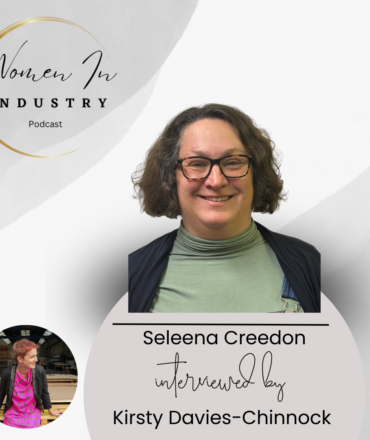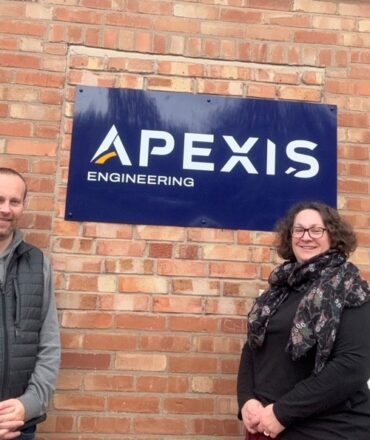


This week Seleena attended the EarthScale event at the University of Derby hub which is designed to support businesses who’ve put sustainability and environment at the heart of their operations. Seleena said “I have always avoided this topic here at Apexis Engineering because I refuse to greenwash and prefer to ensure we are living our values in the work that we complete.” This blog highlights how we operate when it comes to designing, manufacturing and installing special purpose machines, customised plant, bespoke machinery and equipment for production sites.
At Apexis Engineering, sustainability isn’t a marketing layer added at the end of a project. It’s built into the engineering decisions that shape every bespoke machine we design and manufacture.
Engineering for longevity and not obsolescence
The environmental impact in industrial machinery isn’t just about energy use for daily operations it’s also about how often equipment needs replacing. A poorly designed piece of plant that fails prematurely or becomes obsolete within a few years carries a far greater lifecycle cost than one that runs reliably for decades.
That’s why our approach to sustainability always starts with durability.
When it comes to long-term mechanical integrity we take into consideration the real operating conditions of your site, and design accordingly.
For the materials that are selected we’ll look at wear resistance, ease of replacement for components, standardisation of parts, fatigue life and environmental exposure to ensure that everything is fit for purpose when installed on your production line.
Apexis Engineering’s approach is that machines will continue to perform consistently long after typical depreciation cycles, reducing the need for replacement or major overhauls by your maintenance team.
Designed for disassembly and recovery
Whilst we like the idea of our machines and equipment being in situ for decades we appreciate that sometimes we’re designing something for a very specific purpose that has an end of life. For example when we designed a pallet lifter to help with a factory that needed specific items moving for the refurbishment and moving into position again.
So we consider end of life at the beginning of the design process, not when we’re installing what we’ve designed!
We design machines so that components can be:
- Easily maintained using standard tools and logical assembly sequences
- Identified and categorised by material type for straight forward reuse or recycling
- Removed without damage to adjacent systems enabling reuse where possible
For example, modular subassemblies, such as guarding, drive systems and tooling interfaces can be removed intact. This enable clients to repurpose high value elements rather than scrapping entire systems.
Where viable we avoid permanent joining methods (like unnecessary welding across dissimilar materials) that complicate material recovery later.
Easy maintenance by design and not as an afterthought
In our experience a machine that is difficult to maintain will not be maintained properly which is where efficiency, reliability, quality and sustainability all start to degrade.
We design everything with in-house engineering and maintenance teams in mind and provide:
- Clear access to service points without full strip-downs
- Easy to install machinery that’s plug and play
- Standardised components that are readily available in the supply chain
- Logical layouts that make fault-finding straightforward
- Documentation that reflects how engineers work on the shop floor
- CAD files that can be seen using free programmes (like e-drawings)
Our goal is simple; reduce downtime, extend service life, provide quality, and eliminate unnecessary intervention complexity.
Upgradeable and not disposable
Processes evolve we understand that; things like production volumes change, product designs shift, new technologies emerge and quality requirements change. Rather than locking clients into fixed systems we design machinery, plant and equipment that can adapt.
Our approach is always about avoiding full machine replacement; machinery upgrades, machine modernisation, space and capacity allowances are all well considered at the design stage.
Practical sustainability and not just claims
We don’t frame sustainability as a separate feature because that would be disingenuous, but we do feel it’s a direct outcome of good engineering practice.
A machine that lasts longer, can be maintained easily, adapts to change, and can be dismantled responsibly at end-of-life is inherently more sustainable than one designed purely for short-term cost or speed of delivery.
For manufacturers our approach translates into:
- Lower total cost of ownership
- Reduced unplanned downtime
- Greater operational resilience
- A smaller long term environment footprint without compromise on performance
In today’s industrial landscape, investing in bespoke machinery design is not just about meeting immediate production needs, it’s about securing long-term performance, reliability, and value. At Apexis Engineering, we deliver high quality manufacturing equipment engineered for durability, adaptability, and efficient lifecycle management. By prioritising robust design, ease of maintenance, and responsible end-of-life recovery, our bespoke machinery solutions help manufacturers reduce downtime, optimise total cost of ownership, and futureproof their operations. For businesses seeking dependable, precision-engineered systems, bespoke machinery design done properly is not an added benefit—it’s a strategic advantage.
If you’re planning a new system or upgrading an existing process, we can help you build something that delivers now and continues delivering long into the future.