
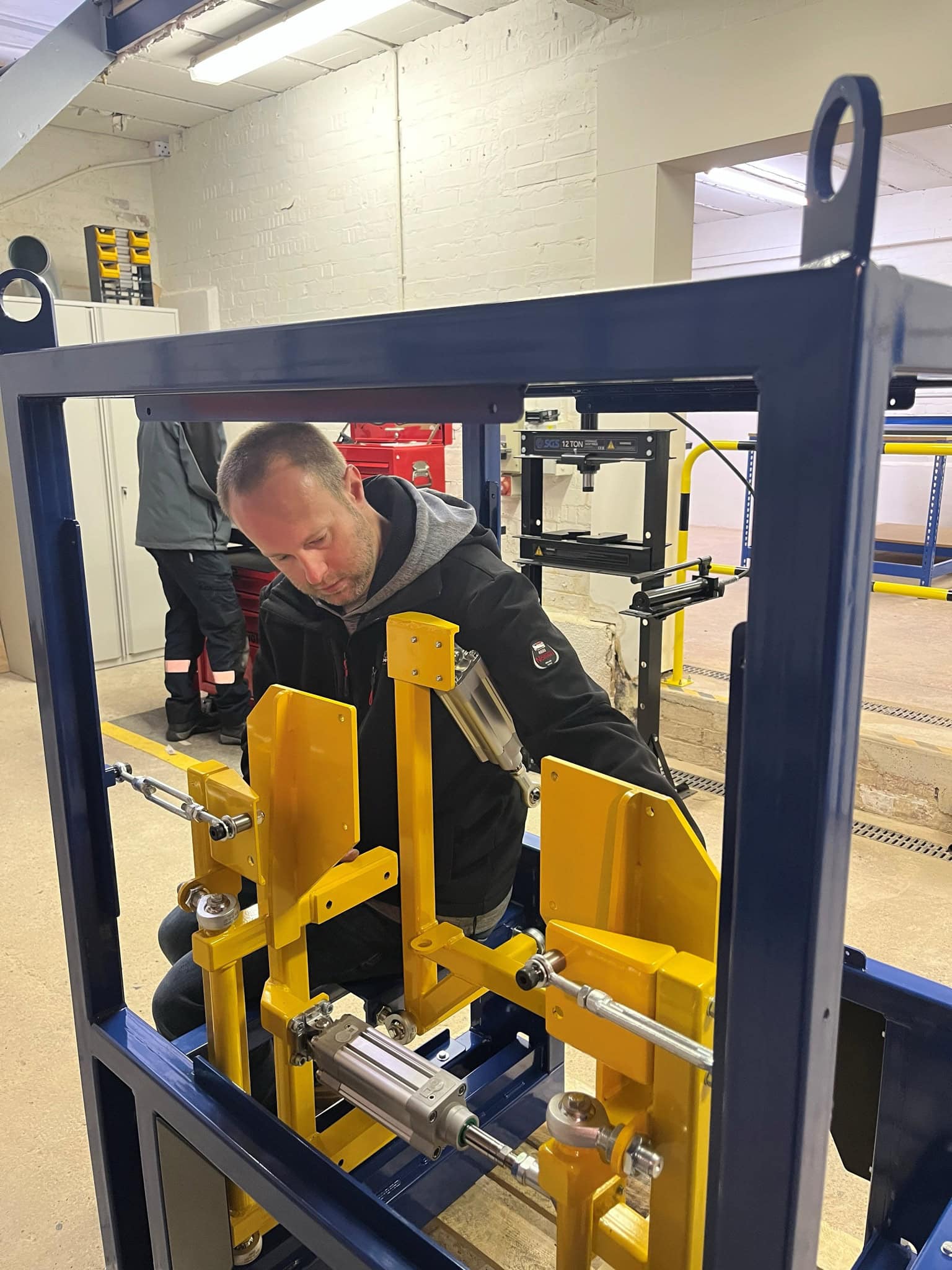
In this Expert Log, we look at why it’s so important that the person designing a special purpose machine or bespoke piece of plant also understands how to physically build and assemble it.
We explore how combining CAD design engineering with practical mechanical engineering experience can make the difference between a design that looks good on screen and one that goes together efficiently in the workshop. From understanding fabrication processes and assembly sequences to knowing where to allow access for tools and how components should locate, we explain why having the designer involved in the build can deliver better engineering, fewer problems and a more successful project.
A good design needs to work in the real world
Modern CAD software allows engineers to create incredibly detailed 3D models of machinery and plant. Components can be designed down to the smallest detail, assemblies can be checked for interference, and complex mechanisms can be visualised before anything is manufactured.
But there is one important question that doesn’t always get asked:
Can the person who designed the machine actually build it?
It’s a simple question, but one that can have a significant impact on the success of a mechanical engineering project.
A machine might look perfect in CAD, with every component positioned exactly where it should be. But when the parts arrive in the workshop, the practicalities of putting everything together can tell a very different story.
A bolt might be impossible to tighten because there isn’t enough room for a spanner. A bearing might be difficult to fit because there is no suitable access. A motor might need to be removed before another component can be installed. Or a fabricated assembly might require an awkward sequence of operations that could have been avoided through a different design approach.
These are all examples of problems that can be identified much earlier when the designer understands the practicalities of building the machine.
At Apexis Engineering, we believe that good mechanical engineering needs both sides of the skill set: the ability to design something and the practical experience to know how to put it together.
The difference between designing and building
There are many talented CAD design engineers who can produce excellent 3D models and manufacturing drawings.
Their expertise is in turning an engineering requirement into a detailed design, selecting components, creating assemblies and ensuring that the machine meets its technical requirements.
But designing a machine and building one are two different disciplines.
Building machinery requires an understanding of how components physically fit together, how they need to be handled, what tools are required and the order in which things need to happen.
It involves practical considerations that aren’t always obvious when looking at a 3D model.
For example:
- Can a fabricated component physically be manoeuvred into position?
- Is there enough clearance to fit and tighten all the fixings?
- Can bearings, shafts and couplings be installed without dismantling half the machine?
- Are components accessible for welding, machining or inspection?
- Can the machine be assembled in logical sections?
- Is there sufficient access for maintenance once the machine is installed?
- Can the assembly be completed without needing specialist tools or complicated workarounds?
These are the sorts of questions that someone with hands-on mechanical engineering experience will naturally consider.
And, importantly, they should be considered during the design process, not when the machine is already sitting in the workshop.
Why the designer should be involved in the workshop build
We believe there is real value in the person responsible for the CAD design being involved in the physical assembly of the machine here at Unit 5.
It’s not simply about supervising the build or checking that the workshop is following the drawings. It’s about having the knowledge and understanding to see how the design translates into a physical product.
When the designer is involved, they can make informed decisions as the build progresses.
1. Understanding how components fit together
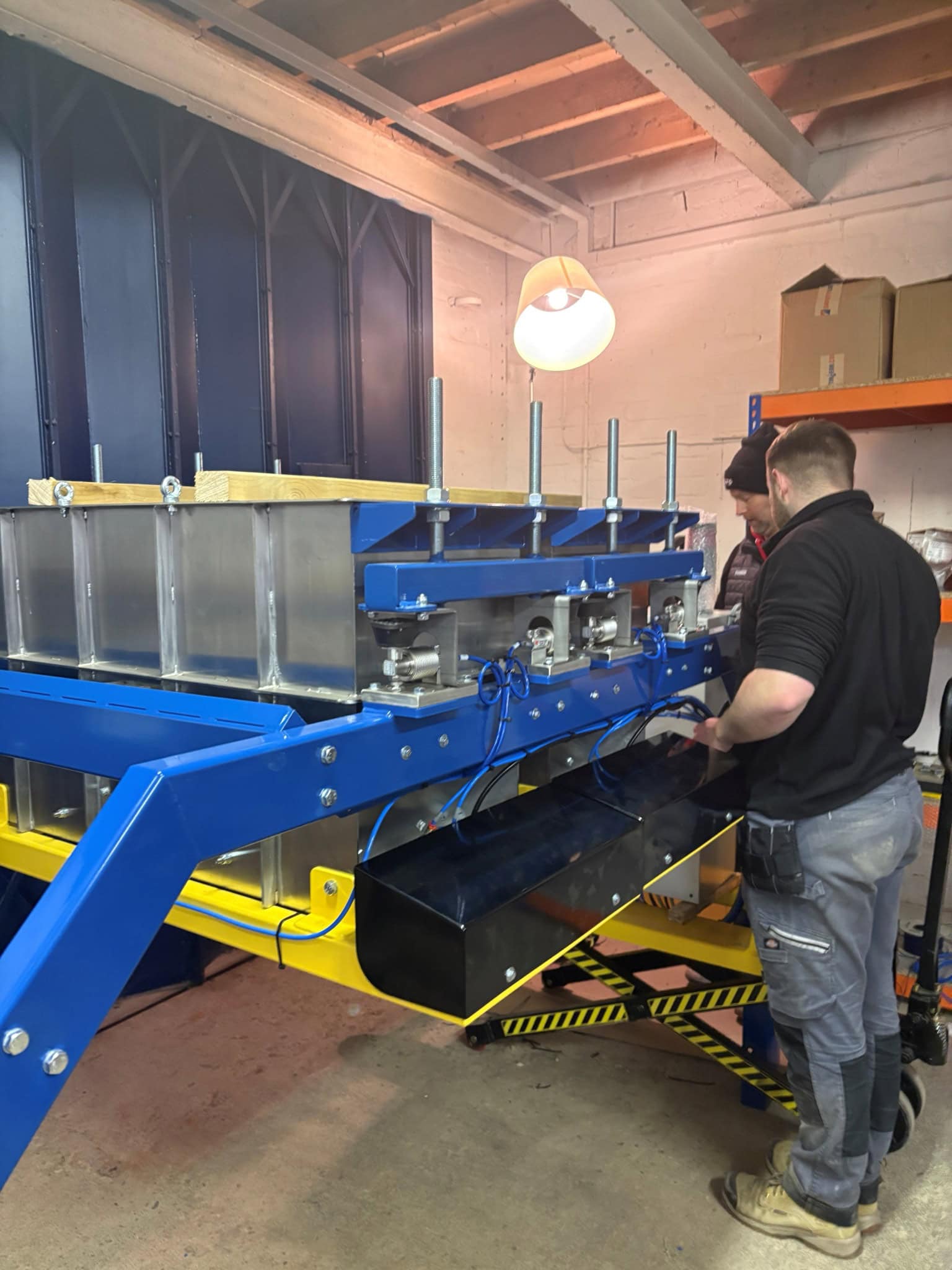
A 3D CAD model shows how components are intended to fit together, but physically assembling them can reveal things that aren’t immediately apparent on screen.
For example, a component might technically fit within an assembly but be extremely difficult to position because of the surrounding structure.
A shaft might need to be inserted before another component is fitted. A bearing housing might need to be accessible from a particular direction. A motor mounting plate might need additional clearance to allow adjustment.
Someone who understands the assembly process will recognise these requirements and can design accordingly.
When the designer is also the person building the machine, they can see first-hand whether the design works as intended and make appropriate improvements.
2. Designing with the manufacturing process in mind
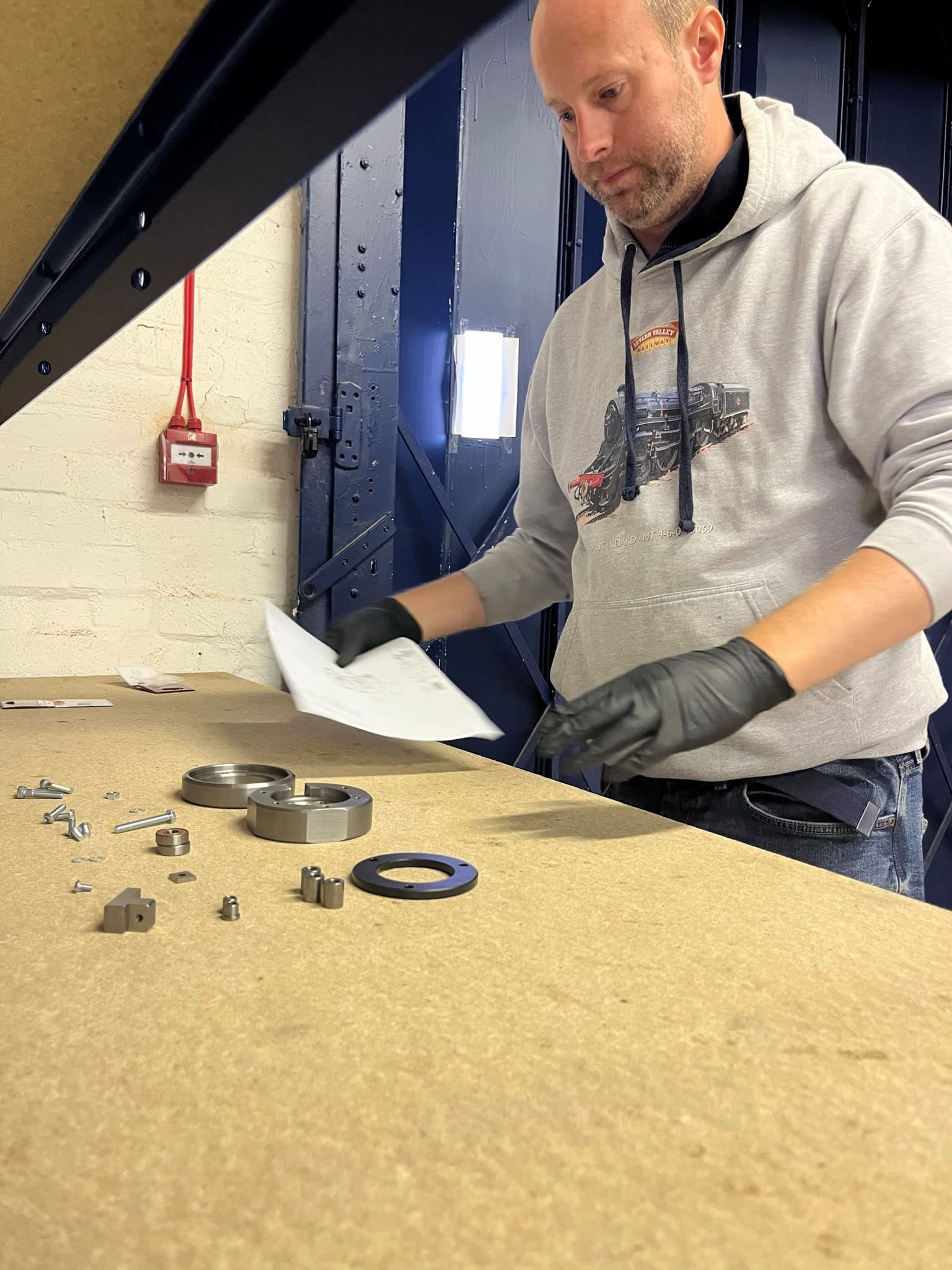
The design needs to take account of how the individual components will be manufactured.
A fabricated steel assembly, for example, needs to be designed with welding, cutting, bending and machining processes in mind.
The designer should understand how parts will be held, positioned and joined together, and whether the proposed construction method is practical.
A design might look straightforward in CAD but require complicated fabrication fixtures or awkward welding access.
A small change to the design could make a significant difference to the manufacturing process.
This is where practical experience becomes particularly valuable. Understanding the workshop processes means the designer can create components that are not only technically correct but also sensible to manufacture.
3. Getting the assembly sequence right
The order in which a machine is assembled is incredibly important.
Some components need to be fitted before others. Certain fixings become inaccessible once surrounding parts are installed. Heavy assemblies might need to be positioned using lifting equipment, while other components need to be fitted before the structure is closed off.
If the designer understands the assembly sequence, they can build this into the design.
For example, designing a machine as a series of smaller sub-assemblies might make it much easier to manufacture, transport and install.
It can also reduce the time spent working in awkward positions or trying to fit components into restricted spaces.
This is particularly important with special purpose machinery, where every machine may have a unique arrangement and there isn’t necessarily an established assembly process to follow.
4. Knowing the importance of the small details
Sometimes it’s the smallest design details that make the biggest difference in the workshop.
A little extra clearance around a bolt can make tightening it straightforward. A shoulder on a shaft can provide a positive location for a bearing. A simple locating feature can ensure that a component is fitted in exactly the right position.
Other examples include:
- Providing adequate access for spanners and other tools.
- Allowing sufficient clearance for electrical and mechanical connections.
- Including lifting points where assemblies need to be handled.
- Making adjustment points accessible.
- Ensuring components can be removed without dismantling unrelated parts.
- Providing sensible access for lubrication and maintenance.
These details might not look particularly significant on a drawing, but they can save considerable time during assembly and throughout the machine’s working life.
They are also the sorts of things that come naturally to someone who has spent time physically building and maintaining machinery.
5. Identifying problems and resolving them quickly
Even with the best design process, building bespoke machinery can present unexpected challenges.
There may be a tolerance issue, a component that needs slight adjustment or an interface that doesn’t work quite as anticipated.
When the designer is also involved in the build, there is continuity between the original design decisions and the practical solution.
They understand why a particular component was designed in a certain way and can assess the implications of making a change.
Rather than passing a problem between the design office and workshop, the person who understands the whole machine can investigate it and make an informed decision.
This can help avoid unnecessary delays, repeated conversations and changes that create further problems elsewhere in the assembly.
It also provides valuable feedback that can be incorporated into the CAD model and manufacturing drawings, ensuring the final documentation reflects the machine that has been built.
Designing for maintenance, not just assembly
There is another important benefit to having a designer who understands the physical construction of machinery: they are more likely to think about what happens after the machine leaves the workshop.
A machine needs to be maintained, inspected and occasionally repaired.
Components will wear, bearings may need replacing, belts and chains may require adjustment and motors or other equipment might eventually need changing.
If the design makes these tasks difficult, the consequences can be felt throughout the machine’s operational life.
A designer with practical mechanical engineering experience will consider how components can be accessed and removed, whether maintenance tasks can be carried out safely and whether common replacement parts can be sourced easily.
For example, there is little benefit in designing a bearing arrangement that performs perfectly but requires the removal of several other major components just to replace the bearing.
Thinking about maintenance during the design stage can save considerable time and money later.
It’s another example of why understanding how to build a machine helps create a better machine overall.
Bringing the engineer and mechanic together
At Apexis Engineering, this combination of skills is one of our key strengths.
Our Director, Craig Harbron, brings together extensive CAD design engineering experience with practical, hands-on mechanical engineering qualifications and, more importantly, skills.
He doesn’t just design special purpose machines and leave someone else to work out how to assemble them.
He understands the physical processes involved in manufacturing, building, installing and maintaining the equipment he designs.
That means the practicalities of the workshop influence the design from the outset.
When Craig creates a CAD model, he is already thinking about how the machine will be assembled.

Where does the motor need to sit? How will the shaft locate? Can the bearings be fitted easily? Is there room to get a spanner onto the bolts? Can the assembly be handled safely? What happens when something needs replacing?
These considerations become part of the design process rather than problems to be solved later.
It is this understanding of both the digital and physical sides of mechanical engineering that allows us to deliver practical, commercially aware solutions for our clients.
The benefits for your engineering project
Having the designer involved in the physical build can deliver benefits across the entire project.
You benefit from
- Better designs: practical workshop experience influences design decisions, resulting in machinery that is easier to manufacture and assemble.
- Fewer surprises: potential problems can be identified earlier, reducing unexpected changes and delays during the build.
- Quicker assembly: components and assemblies are designed with the installation sequence and practical access requirements in mind.
- Improved quality: the designer can check that the finished machine matches the design intent and resolve any issues directly.
- Easier maintenance: equipment is designed with future access, servicing and component replacement in mind.
- Better project continuity: knowledge is retained from the initial concept through design, manufacture, assembly and installation.
Ultimately, it means less time spent overcoming problems that could have been avoided and more time focused on delivering the machine the customer has specified.
The Apexis Engineering approach: From CAD to completion
We don’t believe mechanical engineering should stop when the drawings are finished.
At Apexis Engineering, we offer a turnkey approach to bespoke machinery and plant projects, bringing together concept development, CAD design, manufacture, fabrication, assembly and installation.
Our industrial unit in Derby provides the space to bring machinery projects together and carry out assembly and integration before equipment is delivered to the customer’s site.
We also work with a network of trusted manufacturing partners to provide the specialist fabrication, machining and other processes required for each project.
Having the designer involved in the build means that the original engineering knowledge remains part of the project right through to completion.
It also gives us the opportunity to test the design in practice, identify improvements and ensure the finished equipment is ready for its intended application.
We can even invite customers to see their machinery assembled and operating at our unit before it is transported to their premises.
For us, that’s what a true concept-to-completion engineering service should look like.
Should you ask your machine designer if they can build it?
If you’re planning a special purpose machine or bespoke plant, it’s worth asking a few questions before choosing your engineering partner:
- Does the person designing the machine have practical experience of building machinery?
- Do they understand the manufacturing processes required to produce their designs?
- Can they explain how the machine will be assembled and in what order?
- Have they considered access for tools, adjustment and maintenance?
- Will the designer be involved when the machine is physically built?
- Can they take responsibility for the project beyond producing the CAD models and drawings?
You might be surprised by the answers.
There is nothing wrong with having separate design and manufacturing specialists. Both have important skills and expertise.
But when those skills are combined, and the person designing the machine understands exactly what is involved in building it, there is a real opportunity to achieve a better outcome.
Good engineering isn’t just about what you can design. It’s about what you can build.
A beautifully detailed CAD model is a great starting point, but it is only one part of a successful mechanical engineering project.
The real test is whether the machine can be manufactured, assembled, installed and operated as intended.
At Apexis Engineering, we believe that the person designing bespoke machinery should understand how it goes together in the workshop. That practical knowledge makes a difference to the decisions made during design and ultimately to the quality of the finished machine.
We bring the engineer and mechanic together to make sure your machine works just as well in the real world as it does on screen.
Expert Log
More from the Expert Log
Practical insight from our engineers on design, manufacture and assembly.

Assembly like LEGO
Why everything we design just fits, and goes together quickly, cleanly and predictably.
Read Assembly like LEGO →
Designed for a perfect fit
Why tolerances are critical when designing machinery, plant and equipment.
Read Designed for a perfect fit →Expert Log
Browse every article
All of our engineers’ articles on design, manufacture and assembly in one place.
All Expert Log articles →