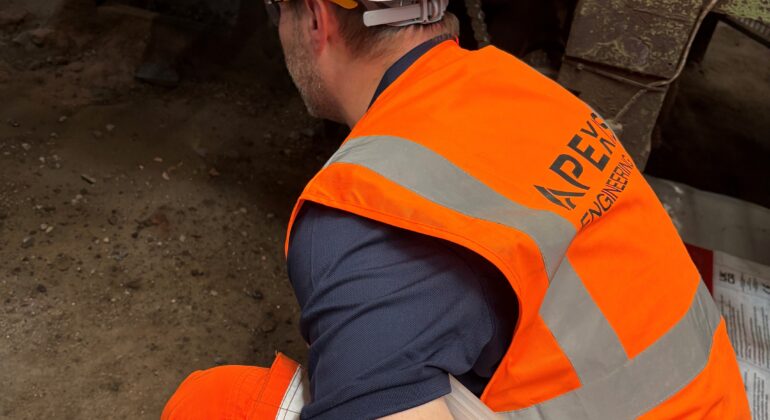

Positive signs in the Manufacturing sector
There is plenty of reason for optimism.
With a seven month run of expansions, employment levels having risen for a third successive month and manufacturing output also increased for three consecutive months and new orders continuing to grow manufacturers are feeling positive.
Major investments in aerospace, defence, pharmaceuticals and advanced manufacturing there’s lots of confidence in the UK’s capabilities. Closer to Apexis Engineering is the developments at Rolls Royce with their investment in SMR here in Derby which reinforces the East Midland’s region as a centre of engineering excellence and industrial innovation.
These types of investments, like the Haribo’s £35million facility and Bentley Motors investment in the state-of-the-art paint shop at their Crew factory, it shows that manufacturing remains a vital contributor to economic growth and a cornerstone of Britain’s industrial future.
Looking beyond the headline numbers
The PMI growth and the headlines of investment that we’ve seen so far this year alone don’t tell the full story.
The pace of growth has slowed to its weakest level since December 2025. Export orders remain positive but have lost momentum, while investment goods output has declined. These aren’t dramatic warning signs but they suggest that confidence remains very fragile in parts of the manufacturing sector.
The investment trends are particularly important.
When manufacturers invest in machinery, plant, equipment and production capacity board members and shareholders are making a statement about future demand and commitment. A slowdown in investment can reflect caution about the future and confidence.
Not all manufacturers are passing the CAPEX on investment this year, some are still holding back whilst they navigate what’s forecast for the remainder of the year in uncertain World economic times from instability across many regions.
The stockpiling effect
When the Steel tariffs were announced businesses who are reliant on this material began inventory building.
Increasing stock levels to protect against supply disruptions, shipping delays and future price increases doesn’t necessarily represent sustainable underlying demand.
If part of the current increase in output is being driven by stockpiling rather than end user demand there’s a risk that momentum could soften once inventories return to normal levels.
Cost pressures continue
Perhaps the biggest challenge manufacturers are still facing are costs.
Energy prices continue to place pressure on our competitiveness as we face higher costs in this area than many international competitors. Material costs, employment expenses and on-going supply chain disruption are also affecting margins and investment decisions.
For manufacturers success depends on operational efficiency, engineering excellence and the ability to adapt quickly to changing market conditions.

Rebuilding our industrial resilience
One of the most significant manufacturing developments this year hasn’t come from a PMI report.
It came from the Government’s decision to bring British Steel into public ownership.
Our Industrial Strategy
Innovation always defines the next chapter
There’s lots of chatter about innovation around digitalisation within manufacturing; artificial intelligence, automation, digital engineering and advanced manufacturing technologies continue to gain momentum across the sector. Businesses are increasingly exploring how technology can improve productivity, enhance quality and support better decision-making.
The manufacturers that thrive in the coming years are likely to be those that successfully combine innovation with strong engineering fundamentals.
Technology alone is not the answer.
Engineering expertise, practical problem-solving, quality and reliability remain the foundations on which sustainable growth is built. Think the Ford story we spoke about in our latest Engineering Echo!
From the Apexis Engineering perspective
Our manufacturing sector is undoubtedly in a stronger position than it was a year ago.
Growth has returned. Investment is being made. Manufacturing has moved back to the forefront of economic policy discussions. There is a renewed focus on strengthening domestic capability, improving competitiveness and creating a more resilient industrial base.
Yet challenges remain.
Slowing order growth, cautious investment behaviour, energy costs and geopolitical uncertainty all suggest that the recovery is still evolving rather than fully established.
For Apexis Engineering, the path forward is clear: continue to provide the world class engineering support that we do to help build the resilient, high-performing manufacturing sector that Britain’s future depends on.
The recovery has begun. We’ve seen that with enquiries and orders from our client base across multiple sectors within the manufacturing industry.
Now the challenge is turning that recovery into long-term resilience.