

The UK’s manufacturing sector has shown encouraging signs of recovery during the first half of 2026. After a challenging period marked by inflation, supply chain disruption and economic uncertainty, manufacturers are reporting stronger levels of output, improving order books and renewed confidence in future growth.
According to the latest S&P Global UK Manufacturing PMI data, the sector has returned to sustained expansion, with output and new orders increasing at their fastest pace in several years. Production levels have improved across a range of industries, reflecting growing demand both domestically and internationally. While some businesses have accelerated purchasing activity to mitigate future cost increases, the overall picture suggests a sector that is becoming increasingly resilient and investment focused.
Despite this positive momentum, manufacturers continue to face significant challenges. Rising material costs, labour shortages, energy price volatility and competitive pressures remain key concerns. As a result, many businesses are looking beyond traditional cost-cutting measures and focusing instead on improving productivity, quality and operational efficiency.
What we are seeing here at Apexis Engineering is that for 2026 manufacturers and OEMs are operating this year with a focus on engineering innovation and smarter equipment design as being just as important as sales growth.
What is Manufacturing Performance in 2026 so far showing?
The latest UK Manufacturing PMI figures indicate that manufacturing activity strengthened considerably during the first half of the year, reaching levels not seen since 2022 which is great news.
New business volumes have increased, production output has expanded and business confidence has improved despite ongoing economic uncertainty within the manufacturing sector.
This aligns with findings from Make UK‘s Manufacturing Outlook reports, which suggest that while overall growth remains modest, manufacturers are increasingly optimistic about future opportunities.
Key sectors including aerospace, defence, infrastructure, advanced engineering and energy-related manufacturing continue to generate investment and demand.
At the same time, manufacturers remain cautious. Many businesses continue to report pressure from:
- High industrial energy costs
- Rising labour and employment costs
- Skills shortages across engineering and manufacturing disciplines
- Supply chain resilience concerns
- Raw material price volatility
- Increasing regulatory and compliance requirements
- Instability on the world stage
These challenges are likely to be forcing manufacturers to find new ways to improve competitiveness without sacrificing quality or increasing operational risk.
Are Investment priorities shifting?
Historically, manufacturers looking to increase capacity often focused on expanding facilities or increasing workforce numbers. In 2026, that approach is becoming increasingly difficult due to labour shortages and rising operating costs.
Instead, businesses within the manufacturing sector are investing in solutions that help them produce more efficiently, improve product quality and reduce waste throughout the production process.
This is creating growing demand for bespoke machinery, customised plant, specialist production equipment and turnkey engineering services that are tailored to the specific needs of each operation.
Unlike standard off-the-shelf equipment, bespoke machinery is designed around a manufacturer’s exact process requirements. This allows businesses to optimise workflows, eliminate inefficiencies and improve productivity without fundamentally changing how their operations work.
For many manufacturers, the greatest opportunities for improvement now come from engineering smarter processes rather than simply increasing production resources.
The growing importance of Value Engineering for OEMs
One of the most significant trends emerging across the manufacturing sector so far this year is the increased adoption of value engineering.
As OEMs face mounting pressure to maintain margins while delivering higher quality products, business directors are increasingly wanting to undertake reviews of existing machinery and equipment designs to identify opportunities for improvement.
Value engineering is not simply about reducing costs. It involves analysing designs, assemblies and manufacturing processes to eliminate unnecessary complexity, improve manufacturability and enhance overall performance.
When applied effectively such as the Apexis Engineering approach, value engineering can deliver substantial benefits including:
- Reduced manufacturing costs
- Lower material consumption
- Improved product quality and consistency
- Faster assembly times
- Reduced production bottlenecks
- Simplified maintenance requirements
- Improved reliability and performance
- Greater scalability for future production growth
Over the years we’ve seen OEMs witness significant savings even with relatively small design improvements. As labour costs continue to rise and competition intensifies, value engineering is becoming a strategic business tool rather than simply an engineering exercise.
How is Apexis Engineering supporting Manufacturers?
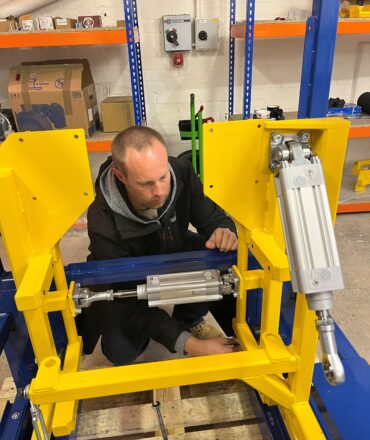
In short with bespoke turnkey engineering solutions where we provide a concept to completion service.
The drive for greater efficiency is creating opportunities for manufacturers to rethink how machinery, equipment and production systems are designed, built and deployed.
Our capabilities include:
- Bespoke machinery design, manufacture and installation
- Customised plant and production equipment
- Engineering design and CAD development
- Design-for-manufacture optimisation
- Machinery assembly and build support
- Reverse engineering of existing equipment
- Manufacturing brokerage and supply chain support
- Value engineering for machinery and equipment redesign
- Specialist handling equipment, lifting devices, jigs, fixtures and access platforms
By working closely with customers from concept through to manufacture and installation, we help businesses develop practical engineering solutions that deliver measurable operational improvements.
What can we expect for the rest of 2026?
The outlook for the remainder of 2026 remains cautiously positive.
Demand is expected to remain relatively stable across many manufacturing sectors, particularly those linked to infrastructure investment, defence, aerospace, energy transition projects and advanced engineering. However, ongoing cost pressures and economic uncertainty are likely to continue influencing investment decisions.
Manufacturers that focus on productivity improvement, quality enhancement and operational efficiency are expected to be best positioned to succeed.
Rather than relying solely on expansion, many businesses will continue investing in engineering solutions that help them do more with existing resources. This includes redesigning machinery, improving assembly processes, machine modernisation, reducing manufacturing costs and implementing bespoke equipment tailored to specific operational requirements.
For OEMs and manufacturers alike, competitive advantage in 2026 is increasingly being driven by engineering excellence.
How can you engineer better Manufacturing Performance?
Our manufacturing sector has entered a more positive phase, but growth alone will not guarantee success. The manufacturers that thrive during the remainder of 2026 will be those that can balance growth with efficiency, quality and cost control.
Bespoke machinery, customised plant solutions and value engineering are becoming essential tools in achieving those goals.
At Apexis Engineering, we help manufacturers and OEMs transform production challenges into practical engineering solutions. Whether reducing assembly times, improving product quality, lowering manufacturing costs or developing entirely new machinery, our focus is on delivering engineering solutions that create lasting value and support long-term manufacturing competitiveness.